BUSINESS MIR/2012-9/22
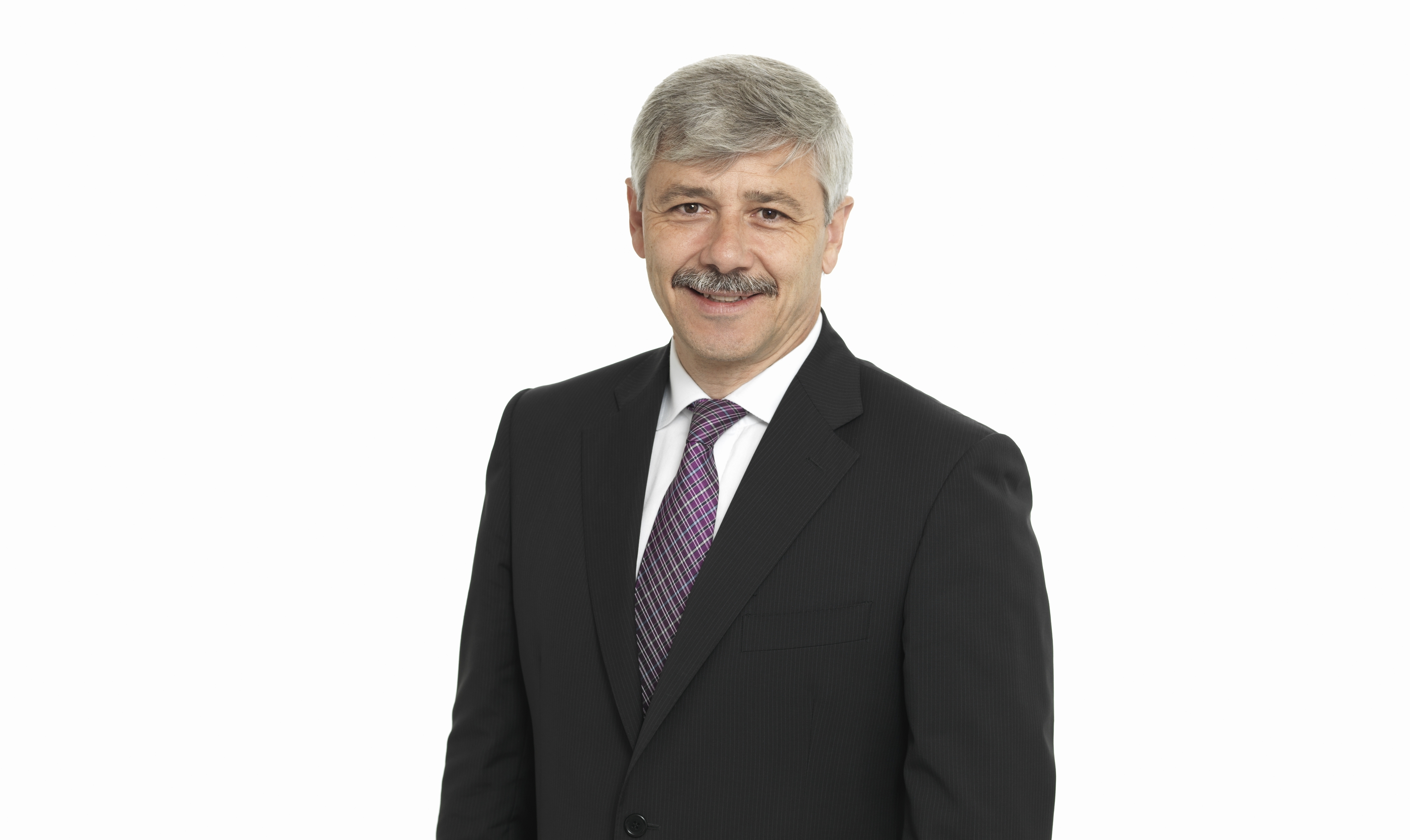
Dr. Carlo Conti, Executive Council of the Canton of Basel-Stadt Head of Department of Public Health
Speaks at the Swiss Russian Health Forum 2012, Sept. 10 Dear Federal Councillor Berset Dear Ambassador Helg Dear Ms Béatrice Lombard-Martin Dear Igor Kagramanyan, Deputy Minister of Health and Social Affairs, Moscow Dear Valery Cheresniev, Chairman of the Science Committee of State Duma Ladies and Gentlemen
It is for me an honour and a pleasure to welcome you today in Basel. I also welcome you most warmly to our city in the name of the Government of Basel.
The friendly relations between our countries, between Russia and Switzerland, go back a long way. And have recently been successfully nurtured and deepened at the federal as well as at the cantonal level. For example, within the context of Basel’s profile in Moscow, meetings took place at the highest political level a year ago, and most recently last week. During the course of these encounters, the Government of the Canton of Basel-Stadt was able to meet official representatives of the City and Region of Moscow. All of these meetings fostered not merely friendly relations, but also laid the foundations for specific projects, for cooperation programmes which aim to promote cultural, economic and scientific exchanges between the two countries.
In my field, the health sector, for example, meetings were held with Prof. Leonid Pechatnikov, since May 2012 Deputy Mayor of Moscow in charge of social issues and healthcare, and Prof. George Golukhov, Head of Moscow City Department of Healthcare. At these, agreement was reached to promote ongoing scientific exchanges between Russian and Basel-based physicians as well as researchers. This was reinforced in a memorandum of understanding which was signed by delegations from Moscow and Basel at Basel University Hospital in March of this year.
.
Right now the first group of young physicians are completing a training programme at Basel University clinics. These programmes are focusing on orthopaedics, urology, traumatology, paediatrics, ophthalmology and oncology.
In addition, last year I had the honour and the pleasure to take part in the First Swiss Russian Health Forum in Moscow. We used that occasion to discuss not merely the different health systems in our respective countries, but also to lay the foundation for the various research and exchange programmes. Basel now has the honour of hosting the Second Swiss Russian Health Forum.
It also gives me particular pleasure today to welcome the member of the Swiss Federal Council with responsibility for the health sector, Health Minister Alain Berset. His presence here underscores the status and importance of these meetings and cooperation between our two countries in the health sector.
If I may say so, Basel is an ideal venue for scientific dialogue such as that for which the Swiss Russian Health Forum was set up. Basel is an old university city, with one of the oldest universities in Europe, founded in the year fourteen sixty. The international Basel region, which includes parts of Switzerland, France and Germany, has a particular focus on the chemical and pharmaceutical industry. Basel is an important economic and research centre. It is not for nothing that its concentration of scientists, which is unique in Europe, is known as “Biovalley”. Basel, and by this I mean the entire region, right across national and cantonal borders, is a place where university traditions, scientific research and the chemical and pharmaceutical industry complement each other with fruitful results. This prosperity is also boosted, of course, by the fact that international companies invest in this location and create jobs here.
Our region is an ideal place for meetings between scientists and physicians. Thanks to the huge investment volumes – the Knowledge Campus established by Novartis, as well as Roche or the ETH Institute (which is setting up a branch here) are all worth mentioning in this conjunction – Basel is developing into a veritable centre for the life sciences.
Nowhere else is the life science industry as important for the regional economy as it is for the Basel region. Its economic significance is evidenced by approximately 26,000 jobs, most of which are highly-qualified and account for around 22 percent of regional gross economic output. The life science industry in Basel, which is unrivalled in Europe, and is in the top third worldwide, is one of the reasons why Basel is continuing to enjoy growth as an economic powerhouse. Targeted networking between science, industry and politics helps make the most of this potential.
The clear commitment to the life sciences centre and to clinical research is a key focus of the legislative programme of Basel’s Executive Council. In this conjunction, the importance of clinical medicine as an interface between university and research is often underestimated, particularly by the public. Medical practice is not just a service for patients, it is also one of the key drivers of medical progress. The “translational research” approach taken by life sciences research is another significant element here. After all, it links the various elements, from basic research through to clinical application.
This approach requires the pooling of inter-faculty strengths in specialist areas of research, with the aim of maximising the exploitation of synergies. Clinical research is networked via the medical faculty, and also includes biochemistry, pharmaceuticals and chemistry. In terms of patient care, it also involves clinically-relevant issues at our university clinics.
Closely networked cutting-edge university research and medicine is a crucial part of the strong life sciences centre in this region. Places where top medicine is offered also attract teaching, research and investment.
Ladies and Gentlemen You will be addressing this topic at an exemplarily high level. This multi-level approach is ideally suited to Basel.
However, Basel is not merely a city of science. It is also a city of culture. Culture, art, music and architecture have flourished here since the middle ages. Art in particular always fell on fertile ground in Basel – our local museums host world-renowned collections of Holbein, Böcklin, Picasso, Klee and Warhol. New museums such as the Jean Tinguely Museum built by Mario Botta and the Fondation Beyeler – the world’s largest private modern art collection, in a much-admired building by Renzo Piano – have recently added to the city’s distinguished reputation in the arts. If you find time in your busy schedule, I can highly recommend a visit to one of our many museums.
I wish in particular to thank you (Pierre Helg, Beatrice Lombard, Igor Kagramanyan Valery Cheresniev) for helping to make a meeting possible between our two countries at this senior level.
Ladies and Gentlemen
I am firmly convinced that your ideas will fall here on fertile ground. I wish you many constructive discussions, many new scientific insights, new ideas and ways of thinking together.
I wish you a comfortable and enjoyable stay in Basel, and a very successful meeting.
It now gives me great pleasure to pass the podium on to you, Federal Councillor Alain Berset.