[bmir/2009-06/14]
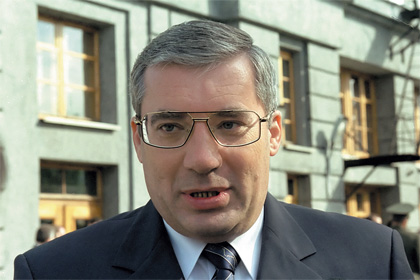
Viktor Tolokonsky, governor of the Novosibirsk Region, southwest Siberia, interviewed by Stanislav Tarasov Business Mir: What are you doing in the region to weather the global economic crisis? Tolokonsky: Of course, the crisis has hit the Novosibirsk Region, but we do not feel its effects so much because we have no oil, gas or other mineral resources. Our economy has bounced back after the initial shock, primarily in the transport, high technology, aircraft manufacturing and several other sectors. Still, our budget revenue has slumped, although not as dramatically as in the other Russian regions whose revenues depend mostly on commodities.
We started acting even before the crisis has hit us, timely calculating many of its potential consequences. This is why in late November 2008, when we were drafting the resolution on the efforts of the region’s executive power bodies to ensure socio-economic development in view of problems in the financial and several other sectors, our managerial staff only had to write down what they had been pondering for months before.
In 2008, the regional budget grew by over 26%, but budget implementation slumped to only 85% in the first months of 2009. Like the other Russian regions, we had problems with access to loans due to the growth of interest rates at commercial banks, and the people’s solvent demand was plummeting because of wage arrears. The situation on our labour market also tightened.
Business Mir: What priority measures did you take? Tolokonsky: In view of growing crisis elements, we first of all reviewed the principles of budget financing. In particular, we have put off several social construction projects, such as the regional cancer centre and the psychiatric hospital, and cut spending on road building and investment projects.
Payments to the executive and legislative bodies, including the salaries of their personnel, have been cut by 18% (RUR716 million or $23.3 million).
Our task is not to try to survive or mend financial and economic holes during the economic downturn, but to create the environment to ensure revenues from the projects we had launched before it.
For the past few years, we have been working to move over from tackling current problems to formulating future-oriented goals. It is a complicated process, because we inherited many economic and social problems from the past. At the same time, we needed to encourage our human resources, the executive staff, researchers and the expert community to form a new vision of the region and Russia’s future in the next decade, and to create the prerequisites for enhancing the region’s competitive advantages.
By now, the regional administration’s anti-crisis council has held over 20 meetings and adopted over 100 decisions and instructions on more than 60 issues.
You probably remember how Anatoly Kvashnin, the president’s representative in the Siberian Federal District, was shocked when he learned that some regions had no anti-crisis action plans and were working in the dark. This is why when Mr Kvashnin saw how many legal acts we adopted in the Novosibirsk Region to ensure the implementation of the anti-crisis package, he recommended publishing them in large editions for purposes of sharing our experience with other regions.
The administration has submitted to the regional legislature several draft laws on government assistance to the people, enterprises and whole economic sectors.
We promptly adopted laws on support to mortgage lending, construction, and agricultural producers.
Fighting unemployment is one of our key priorities. Many enterprises, including the Kuzmin steel plant in Novosibirsk, have organised retraining for their staff within this programme. The steelmaker is now idling because of the lack of demand for its output. Therefore, over 300 of its workers will soon start retraining programmes with the assistance of the resource centre at Vocational School 39, which is located on the plant’s premises and has been the plant’s main social partner since its establishment.
They will train people in professions and trades currently in demand.
Business Mir: What are your main achievements as the region’s governor? Tolokonsky: I am really proud of our achievements in housing construction.
In 2005, we increased the pace of housing construction from 700,000 square metres to more than a million. When I was the mayor of Novosibirsk before my election as the region’s governor, I thought building 200,000 sq m annually was an incredible feat. But now we have surged ahead of all other Russian regions in this respect.
A total of 100,000 sq m of housing has recently been commissioned in Berdsk, a city with a population of 100,000. This is the highest per capita indicator in Russia.
Most importantly, this is not a one-off achievement but a result of hard managerial work and challenging decisions on mortgage lending, which we took in the previous years and continue to implement now despite the economic downturn.
The programme includes a new procedure for determining technical conditions and assigning land plots for construction, a more efficient principle of providing engineering and utility systems, the daring decision to build large residential neighbourhoods, the use of pre-fabricated panels for residential property construction, and the efforts to increase the capacity of our construction materials sector.
Another of our achievements is the growth of production in agriculture despite the crisis. It posted a 9.1% growth in the first quarter, an unheard-of achievement even in the past years. Agriculture is now boosting the growth of our gross regional product, and there are no wage arrears in the sector this year, for the first time in a long time.
More effective operation of the managerial authorities has also encouraged the social activity of rural dwellers. For example, over RUR700 million ($22.3 million, or €16.2 million) of loans have been issued to rural dwellers in the Novosibirsk Region, even though it does not have such big banks as in Moscow, St Petersburg, Tatarstan or the Urals. This is one of the highest figures nationwide.
Agribusinesses will continue to develop in all rural areas of the region. To boost the process, we have adopted a special law stimulating agricultural development.
Although only 600,000 people live in the region’s countryside, they still have all the modern conditions necessary for their professional operation.
The regional administration also expects good results from its efforts to support small and mediumsized businesses in the innovation sphere.
Business Mir: Do the measures you are taking in the industrial sector differ from the measures taken by other regions? Tolokonsky: Yes, there are some differences, but strictly because of the specific conditions in each particular region (excluding the regions that have not drafted their anti-crisis plans or created anti-crisis headquarters). All of them are seeking to attain the same goal – overcome the crisis.
We have compiled two lists of important companies.
One of them is to be approved by the federal government, and the companies listed in it will receive state support from the budgets in accordance with the rules determined by the government. I am referring to the backbone companies that are the largest taxpayer in their city or town, but which are also important for the whole of the country.
The second list contains some 25 companies that receive state assistance at the regional level, in particular regional loan guarantees. The regional budget also guarantees loans issued for completing housing construction projects that are in their final stages, and also state acquisitions from agricultural producers.
At the same time, the goal of the rules for providing assistance and the list of companies is to encourage development rather than simply save companies from ruination. We also provide guarantees to the enterprises that are fulfilling contracts for the supply of equipment that takes a long time to produce, and the companies that act as subcontractors under the state defence order. There are many such enterprises in the region.
Money under the state defence order is not transferred to companies overnight.
What should they do until the receive it? Lose time waiting and so fail to fulfil the order? To prevent this, we provide regional guarantees to such companies, so that they can take out loans and start working immediately.
We know that we cannot work at the same pace now as we did in the past few years, when our economy was growing by an average of 10% annually.
But we are convinced that there will be no economic meltdown in the Novosibirsk Region. We also expect our basic industry, mechanical engineering, to grow at a fast pace, and aircraft manufacturing, the food and processing sectors to produce good results.
Business Mir: Is your region attractive for foreign investment? Tolokonsky: The Novosibirsk Region is highly attractive for foreign investment due to its location, infrastructure and diverse and highly skilled workforce.
Currently, several of our enterprises are implementing investment projects jointly with foreign partners or foreign capital, such as Coca Cola Molino, BP (which has invested some $200 million in the oil business over the past five years), US Nidan LLC (RUR190 million) and Mars, which commissioned a fodder plant in 2003 with foreign capital and whose aggregate investment has by now exceeded RUR1 billion.
In October 2004, we commissioned the first stage of a plant producing components for the VEKA Rus glazed windows made to standards of the German company VEKA, worth RUR600 million. In late 2004, the Novosibirsk branch of the ABOLmed medicine producer unveiled the first stage of a plant to produce fourthgeneration antibiotics with co-financing of the International Bank for Reconstruction and Development, which contributed $4 billion to the $13-billion project.
Other large investors in the Novosibirsk Region’s economy are IKEA Mos, the Russian subsidiary of Sweden’s IKEA furniture and appliances company, British investment fund London & Regional Properties, which plans to complete the construction of a four-star Hilton Hotel in Novosibirsk in 2009 (with investment totalling RUR2.3 billion), and Czech investors in a promising project of Kainsk-BIO, a plant for deep processing of grain and the production of bioethanol. Investment in the latter project will be as large as RUR6.5 billion.
Aggregate foreign investment in the region doubled in 2008 compared to the previous year.
The economic crisis has affected the dynamics of foreign investment in the region, but we hope that all the planned investment projects with foreign capital will be implemented. We are taking the necessary administrative decisions to maintain and promote the region’s investment attractiveness.
Business Mir: You have initiated a youth innovation forum, which is a completely new idea for Russia.
What do you expect to attain? Tolokonsky: Called Iterra 2009, the forum will be held in Novosibirsk on September 9-13, 2009. We expect attendance by over 1,000 young scientists and respected researchers from Russia and other countries as well as delegates from most economic sectors and social projects, which are to present unique ideas and designs.
This mosaic should form a picture allowing us to see the prospects of each sector.
In short, we are trying to involve the huge creative potential of the young people for creating the parameters of the region’s innovation-based economy and its social and cultural elements.
Business Mir: Novosibirsk is a famous research city. What are your scientists doing now? Tolokonsky: You are right in that science is nearly the most famous brand of Novosibirsk. Our Science Town is not just surviving but also developing despite the financial and economic downturn.
We have created a Technology Park programme as part of the efforts to create a cutting-edge infrastructure for innovation business. During the Soviet era, the bulk of our research was secret, but we are declassifying the results of research now that competition is the driving force on the market.
Although we could do with more funds, it has been decided to allocate RUR500 million ($16.3 million, or €11.5 million) from the local budget to build a laboratory and production premises. We are prepared to allocate more in case of need.
This will allow us to start implementing a programme of building company housing for young scientists and private housing for top-notch researchers. This is very important, because we have long departed from the classical system of education, and now young people study and simultaneously work alongside experienced researchers on practical projects. Science can also be described as the producer of new knowledge.
In a word, the crisis has encouraged us to work harder and made our work more interesting and intriguing.
Business Mir: How will the region change in the near future? Tolokonsky: The city and region stand out against the backdrop of the other large Russian cities and regions for objective reasons. We have a large population and economic density and developed infrastructure sectors such as transport, as well as a large airport from which flights are made to many destinations in Russia and abroad.
Novosibirsk is not just a large city but also the centre of a huge regional agglomeration also comprising Omsk, Tomsk, Barnaul, Biysk, Kemerovo, Novokuznetsk and several other large cities. This is definitely a major reason for its rapid development.
Demographers say that the city’s population will grow by at least 250,000 within a decade, bringing the total to 1.7 million people. This is why we cannot consider the city within its present boundaries but should also include its suburbs.
We are building new enterprises to boost the development of the Novosibirsk, Moshkovo, Iskitim and Kochenevo districts and the town of Berdsk, which are part of the agglomeration.
We will also establish technology parks in the agglomeration, above all in Koltsovo and Krasnoobsk, and also encourage the city’s comprehensive development.
I am convinced that science cannot develop properly other than side by side with cutting-edge production.
Professional education schools cannot work well when the range of jobs offered in the city is limited.
Therefore, our goal is to create comparable living standards throughout the region, and we are working to attain it.
Our work has become more difficult in conditions of the crisis, but so much more interesting, especially when you see the results of your efforts and the contribution of your team.